“How much does CCTV cost in Lagos?” is one of the most searched questions among homeowners and business owners in the city. It’s also one of the hardest to answer with just one number. A single camera at a Yaba shop door and a 16-camera setup covering a Lekki estate are both “CCTV installation.” But the price gap between them can be huge.
This guide skips the vague answer. Instead, it breaks down what actually drives CCTV pricing in Lagos. You’ll get realistic budget ranges for common property types. You’ll also see which cost-cutting shortcuts tend to backfire. Read any quote you get after this, and you’ll know if it truly fits your property.
Why CCTV Pricing Varies So Much in Lagos
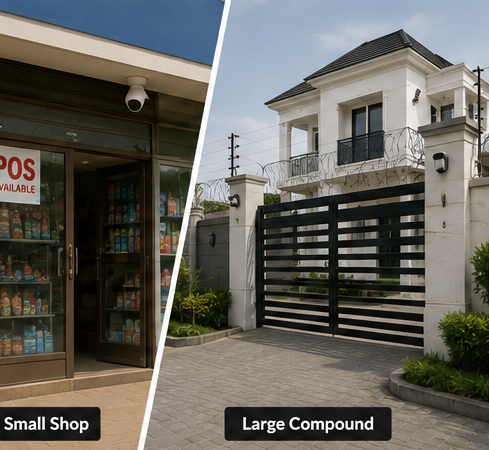
Lagos properties differ a lot in size, layout, and power reliability. Each of these affects cost directly.
- Property size and camera count. A duplex in Magodo needs different coverage than a warehouse in Apapa or a shop in Computer Village.
- Camera type and quality. Basic analog cameras and sharp IP cameras with AI features sit at very different price points.
- Cable distance and building structure. Multi-storey buildings, long compound walls, and a detached boys’ quarters all add to labor and material cost.
- Power backup. Given how outages hit Lagos, a UPS or inverter link for the CCTV system is a real cost line. It’s not something worth skipping.
- Storage needs. More cameras and longer footage retention mean bigger, tougher hard drives.
- Remote access and links to other systems. Setting up the mobile app, and linking to gate locks or alarms, adds setup time.
- Installer quality and warranty. Licensed installers with real electrical skill tend to price differently than informal camera resellers. There’s a good reason for that, covered below.
Realistic Price Ranges by Property Type
Use these as planning ranges to budget and sanity-check quotes. They’re not fixed prices. Your real cost depends on a site visit.
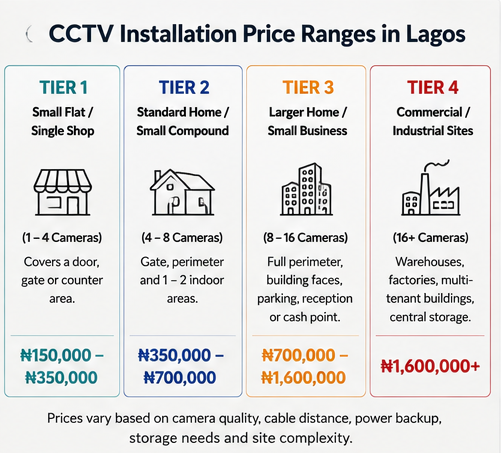
Small flat or single shop (1–4 cameras) This covers a door, gate, or counter area. Usually analog or basic IP cameras, light cabling, and a small recorder. This is the lowest-cost tier. Wireless single-camera setups can cost even less if no cabling is needed.
Standard family home or small compound (4–8 cameras) This covers the gate, perimeter walls, and one or two indoor areas. Most Lagos homeowners land in this range. Here, UPS backup becomes a real part of the quote, not a small add-on.
Larger home, estate unit, or small business (8–16 cameras) This gives fuller coverage of the perimeter, multiple building faces, parking, and sometimes a reception or cash point. Cable routing and conduit work take up a bigger share of the cost at this level.
Commercial, industrial, or multi-building sites (16+ cameras) Think warehouses, factories, event centers, or multi-tenant buildings. Pricing shifts toward IP systems with central storage, proper structured cabling, and often a link to access control. This tier benefits most from a full engineering-led design, not an off-the-shelf package.
The honest takeaway: if any quote comes in far lower than others, ask what’s missing. Usually it’s power backup, proper cable routing, camera quality, or warranty cover. It’s rarely just “efficiency.”
What’s Usually Included vs. What Gets Left Out of Cheap Quotes
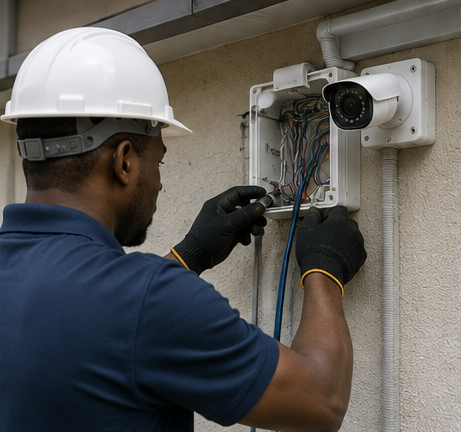
A full CCTV quote should list each of these on its own line:
- Cameras: make, model, resolution, and indoor or outdoor rating
- Recorder and storage, including hard drive size and durability
- Cabling, conduit, and mounting hardware
- Labor for install and setup
- Power backup: UPS sizing or inverter link
- Remote app setup
- Warranty period and what it covers
- Any maintenance visits included after install
Some quotes skip straight to one bottom-line number, with no breakdown. These are the ones most likely to hide gaps. Common gaps include no power backup, exposed cabling with no conduit, or a basic hard drive that isn’t built for nonstop recording and fails within a year.
Cost-Saving Moves That Are Actually Worth It
Not every way to cut cost is a bad idea. Some genuinely make sense.
- Install in phases. Cover your highest-risk points first, like the main gate or entrance. Add more cameras later, instead of funding full coverage all at once.
- Match storage to real need. Seven days of retention is enough for many homes. Thirty days matters more for businesses handling cash or stock. Don’t pay for storage you’ll never use.
- Save the high-spec cameras for high-risk spots. Use analog for low-risk indoor areas. Put sharper IP cameras at entrances, gates, and cash points, where clear identification actually matters.
- Bundle with other electrical work. If you’re already doing wiring, generator, or solar work, let the same team handle CCTV cabling too. This cuts down on repeat site visits and labor cost.
Cost-Saving Moves That Usually Backfire
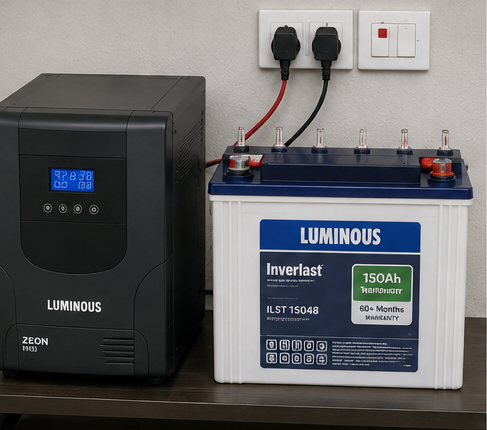
- Skipping power backup to save money. A camera that stops recording during every outage isn’t giving you real security. Outages are often exactly when break-ins happen.
- Choosing the lowest resolution on offer. Footage that can’t show a face or a plate number defeats the whole point of the system.
- Working with an installer who won’t put the scope in writing. Verbal-only quotes tend to grow once the job starts, or shrink in what actually gets delivered.
- Ignoring cable quality and routing. Exposed, unshielded cable wears out faster in Lagos’s heat and rain. That leads to faults and repeat call-out costs down the line.
Getting an Accurate Quote
Since so much depends on your own property, the best way to budget is a free, on-site visit, not a number quoted over the phone. A proper visit should end with a written scope. It should cover camera count and spots, resolution, storage length, power backup plan, and warranty terms. Use that same document to compare against any other quote you get.
If you’re also weighing providers in Ibadan, or want to see how pricing and site factors differ between the two cities, check our companion guide: CCTV Installation Services in Ibadan.
Frequently Asked Questions
How much does CCTV installation cost in Lagos? It depends on camera count, quality, cable distance, power backup, and storage. A single shop door and a full estate perimeter are priced very differently. A free site visit gives you an itemized figure instead of a rough guess.
Is IP camera installation more expensive than analog in Lagos? Usually, yes, upfront. IP cameras and recorders cost more than analog cameras and DVRs. That said, IP systems tend to offer far sharper footage and smart features, which can cut the “hidden cost” of useless footage after an incident.
Does the quote usually include power backup for outages? Not always by default. Ask directly whether a UPS or inverter link for the CCTV system is included. This affects both price and whether the system keeps recording during an outage.
How much does it cost to maintain a CCTV system after installation? This depends on whether it’s a one-off service call or a set maintenance plan. Ask any installer if maintenance is part of the first quote, or billed separately later.
Can I install CCTV in phases to spread out the cost? Yes. Many Lagos homeowners and business owners start with entrance and gate coverage, then add more cameras over time. A good installer sets up the first system so it can grow later, without redoing the cabling or recorder setup.
Is it cheaper to install CCTV myself with wireless cameras? Upfront, yes, for single-point coverage. But systems with several cameras, cabling, and power backup usually need a pro to run well. Bad DIY wiring also brings real electrical safety risk.
Getting Started
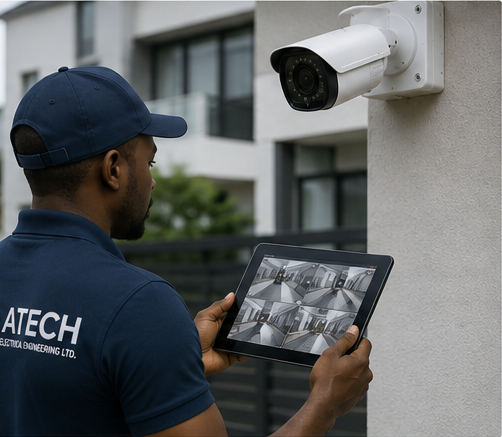
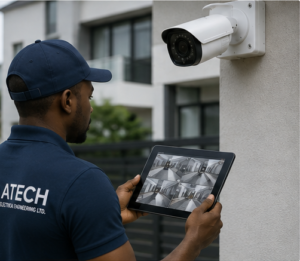
ATech Electrical Engineering Ltd installs CCTV and network cabling across Lagos and Ibadan. The same team brings real electrical engineering skill to every job. That means power backup, earthing, and circuit loading get handled properly, not treated as an afterthought.